
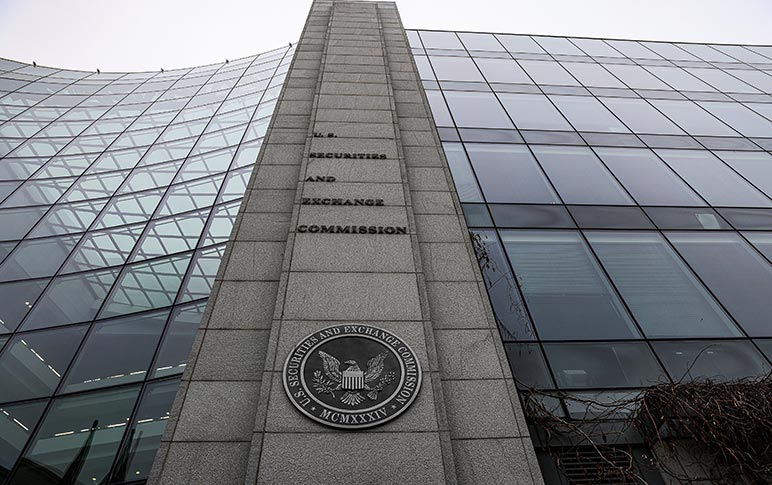
The Securities and Trade Fee on Wednesday expanded its definition of “small” funding advisors to incorporate corporations with lower than $1 billion in shopper belongings.
The change lifts the brink 40-fold from $25 million presently and permits the SEC to think about 1000’s extra corporations when evaluating the affect of latest guidelines. The bar was final modified in 1998.
The brand new definition doesn’t have an effect on the $100 million-asset threshold that the SEC typically makes use of to find out which corporations should register with it or state regulators, nor does it scale back their present compliance obligations.
As an alternative, the ultimate rule considerably expands the variety of corporations the SEC should deal with as small underneath the Regulatory Flexibility Act, which requires federal companies to evaluate how new guidelines have an effect on small companies and whether or not much less burdensome options, corresponding to longer deadlines or easier necessities, may nonetheless meet the foundations’ targets.
Solely 451 of 15,909 registered funding advisors, about 3%, certified as small in 2025 underneath the outdated definition, the company stated in its January proposal. It estimates that about 10,180 extra will now should reply questions on their small enterprise standing on their Kind ADV.
The SEC stated that corporations underneath $1 billion account for 75% of the business however oversee lower than 3% of complete belongings.
Advisors nonetheless gained’t qualify as small in the event that they management, are managed by or are underneath widespread management with one other advisor managing $1 billion or extra.
In a press release, SEC Chairman Paul Atkins referred to as the replace “an vital step to eradicate pointless regulatory burdens and modernize our rulebook.”
The SEC stated it obtained about 20 feedback on the proposal. The Funding Adviser Affiliation backed the brand new threshold, whereas the Public Buyers Advocate Bar Affiliation and Higher Markets argued it will reclassify too many corporations and weaken investor protections. The SEC rejected that argument, saying the designation doesn’t really alter any investor safety.
The adjustment comes amid a wave of business consolidation, and sellers have usually cited rising compliance prices among the many components of their determination to companion with a bigger agency.
SEC Commissioner Mark Uyeda stated in a separate assertion on Wednesday that the company wished to make sure that smaller corporations are “not topic to rules that could be disproportionately burdensome relative to the advantages or enhancements in investor safety.”